
Group Stage Betting Tips for World Cup 2026 Matches

Group stage betting tips centre on reading team motivation, understanding tiebreaker mechanics, and exploiting the expanded 48-team World Cup format where more qualification spots create genuine underdog value. Rather than backing favourites at compressed odds, profitable group betting comes from context, rotation patterns, bracket paths, and final-matchday incentives that the public routinely misprices.
Definition: Group stage betting tips are evidence-based strategies for wagering on World Cup round-robin matches, covering markets like group winner, to qualify, correct score, and match result while accounting for shifting motivation, tiebreaker rules, and format-specific dynamics.
TL;DR
- The 2026 World Cup's 48-team format with 12 groups of 4 changes qualification maths and creates new value on underdogs in group qualification betting.
- Motivation shifts across three group matches are the single biggest edge, final-round rotation, dead rubbers, and bracket-path avoidance move outcomes more than raw talent.
- Public bias consistently overprices tournament favourites in group winner markets, so contrarian approaches and conservative bet types, such as draw no bet and under goals, often hold more long-term value.
What Group Stage Betting Tips Actually Mean for World Cup 2026
Group stage betting tips are structured betting angles for World Cup round-robin matches, where each team plays three games and the standings change after every result. They cover group winner, to qualify, match result, correct score, BTTS, totals, and sometimes futures tied to knockout paths.
The 2026 format matters because it moves from 32 teams to 48, split into 12 groups of 4. The top two teams in each group advance, along with the highest-ranked third-placed teams. That makes “to qualify” less binary than the old format.
Three matches are not enough for clean statistical certainty. A team can look poor for 60 minutes, nick a set-piece goal, and change the entire group table. The safer route is context first, numbers second. If the lineups land as expected, then the price either makes sense or it doesn't.
Good World Cup 2026 betting tips deliver probability, context, and risk labels, not guaranteed winners.
Five Must-Know Facts About World Cup Group Betting
- Favourites are often overpriced. Big-name nations attract public money, so group winner odds can shorten past fair value before team news even lands.
- The 48-team format helps outsiders. FIFA says the 2026 World Cup expands to 48 teams, with 12 groups of four and a larger knockout field, which keeps more third-place teams live for qualification (FIFA).
- In-play betting is now mainstream. The UK Gambling Commission has reported substantial live-betting participation among online sports bettors, so group matches should be treated as pre-match and in-play markets rather than one static price (UK Gambling Commission).
- Bracket paths change incentives. A favourite may not need maximum risk in match three if a draw protects rest, seeding, or a softer knockout route.
- Tiebreakers shape tactics. Points come first, then goal difference, goals scored, head-to-head criteria, fair play, and potentially drawing of lots under FIFA tournament rules (FIFA regulations).
I keep a group table open during final-round games. Not for decoration. One goal in the other match can flip the better bet from over 2.5 to under 3.5 in seconds.
How World Cup Group Stage Betting Works Behind the Odds
Bookmakers price group winner and to-qualify markets using team ratings, draw simulations, implied probability, and expected public demand. In plain English, they estimate how often each team finishes in each position, then adjust the price for margin and money flow.
The public does not bet evenly. Brazil, Argentina, England, France, and other popular sides pull disproportionate stakes, especially before the first ball is kicked. That can compress a 1.85 fair price into something like 1.65. The market has nudged this down, but that does not mean the bet improved.
Motivation shifts are where the opening lines can lag. Matchday 1 is usually cleanest. Matchday 2 introduces pressure. Matchday 3 can become strange because qualification, goal difference, and bracket mapping all collide.
For group betting, comparing implied probability to motivation is often more useful than comparing two teams by reputation alone.
Tools like WC Betting Tips can help structure that check, but the bettor still has to decide whether the price is worth the risk.
Before You Start: Group Stage Betting Prerequisites
Before you bet a World Cup group, make sure the format, prices, team news, and staking plan are already clear. The aim is to remove guesswork before the group table starts moving and emotions get louder.
- Confirm the qualification rules for the exact group, including tiebreakers, goal difference order, head-to-head details, fair play rules, and how third-placed teams can still advance.
- Check the current market against opening or recent odds. A strong pick can become a poor bet if the closing line has already moved, especially after injury news, suspension updates, or leaked lineups.
- Set your bankroll rules before kick-off. Fix the total World Cup group-stage budget, define one unit, and cap how many group bets you are allowed to place.
- Open the live table before final-round matches begin. In matchday 3, the other game in the group can change motivation faster than the main broadcast explains it.
- Separate planned bets from reactions. Write pre-match picks down, then treat in-play decisions as fresh bets, not revenge, panic, or celebration staking.
How to Apply Group Stage Betting Tips Step by Step
Map Bracket Paths and Qualification Maths
- Map each group's qualification scenarios before odds drop, including likely third-place thresholds and possible knockout opponents.
Spot Motivation Mismatches Across Matchdays
- Track points, goal difference, and goals scored after every group match so you know who needs a win, who can settle, and who must chase margin.
Compare Odds to Your Assessed Probability
- Convert the odds into implied probability and compare that number with your own view. Fractional odds converted in pencil still do the job.
Pick Conservative Markets With Contextual Edges
- Choose markets that match the incentive. Draw no bet, under goals, to qualify, and cautious correct-score angles usually fit group contexts better than heroic outrights.
Lock Staking Limits Before Kick-Off
- Set your unit size and session limit before the group stage begins, then leave it alone when the anthem starts on the living room sofa.
For fresh daily context, World Cup betting tips today should be checked against the group table, not read in isolation.
Squad Rotation and Rest Patterns in Group Qualification Betting
Squad rotation creates value when the market overreacts to missing names or ignores travel and rest. Managers often rotate in the third group match when qualification is secured, nearly secured, or when the bracket path makes preservation more valuable than chasing another goal.
The 2026 tournament adds travel across the United States, Canada, and Mexico. That means recovery time, heat, altitude, and long transfers can push coaches towards fresher legs. Watch press conferences, training footage, and the first two team sheets. A missing centre-back 75 minutes before kick-off can change a BTTS call fast.
Rotated XIs are not automatically weak. France's second-choice midfield or Spain's backup full-backs may still be stronger than a desperate outsider. The bet I would trim first is usually the one that assumes rotation equals surrender.
Sometimes the bench is still better.
Third-Place Scenarios and Underdog Value in World Cup Group Betting
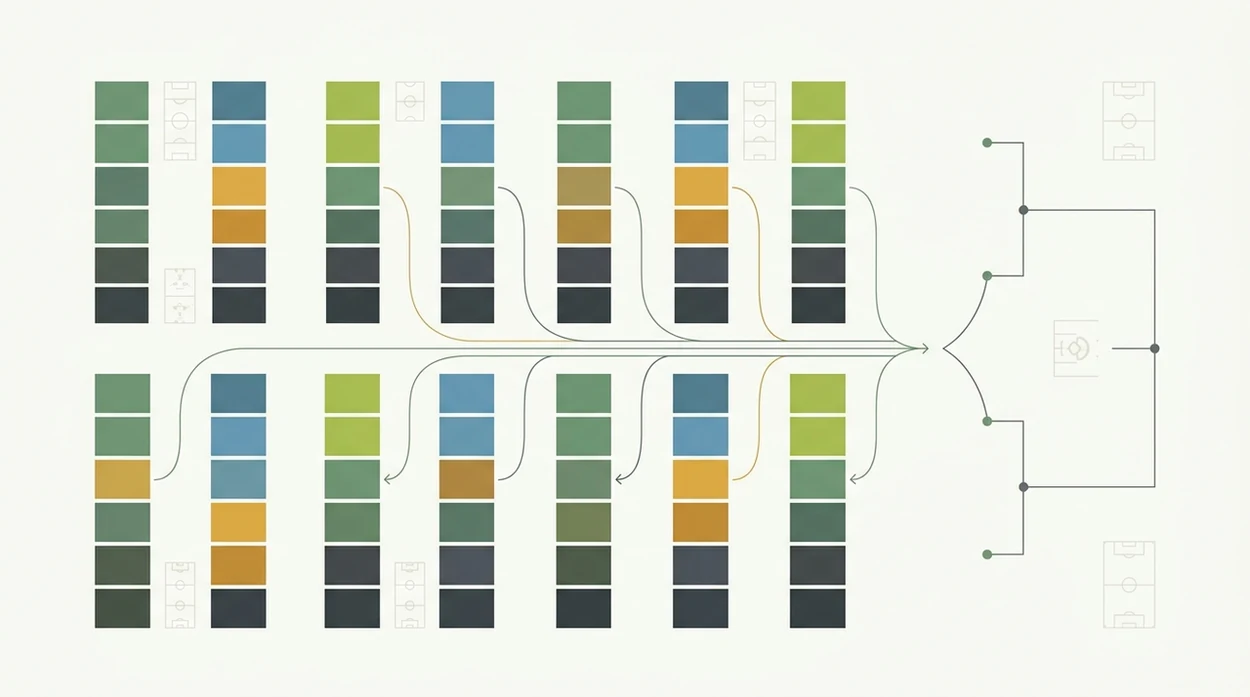
The 2026 World Cup allows the best third-placed teams across the 12 groups to advance, which changes the value of underdog to-qualify markets. A smaller nation may not need to finish above two stronger sides. Four points, or sometimes three with a strong goal difference, can keep the door open.
European Championship formats have already shown how third-place qualification changes late-group behaviour. Teams protect draws. Coaches delay substitutions. Favourites sometimes accept control rather than chase a second goal.
That is why an underdog “to qualify” price can offer better expected value than backing a favourite to win the group at a cramped number. The outsider has more routes to cash.
For higher-risk bettors, one approach is pairing a small to-qualify bet with a tiny quarter-final future after the bracket becomes clearer. It is not a banker, just a lower-risk angle than pretending the favourite must dominate all three matches.
Common Myths About Group Stage Betting Tips
The first myth is that tournament favourites are always the best value to win their group. They may be the most likely winner, but likely and well-priced are different things. If a side should be 1.90 and trades at 1.55, the badge is doing too much work.
Another myth says dead-rubber matches are meaningless. They are often messy, but not useless. A team may still want rhythm, a better bracket path, or a cleaner defensive record before the knockouts.
Underdogs also qualify more often than casual bettors assume, especially when the format gives them a third-place route. One upset draw can matter.
The last myth is that all three group matches carry equal importance. They don't. Matchday 3 is its own market. A nil-nil option under a rainy forecast can make more sense than backing the stronger team at a short price, especially when both sides benefit from caution.
For match-by-match reasoning, World Cup match predictions should show the incentive, not just the stronger squad.
Common Group Stage Betting Mistakes to Avoid
The most common mistake is chasing bad numbers. If a favourite opened at 2.05 and is now 1.72 because every preview loves them, ask what changed. If nothing changed, you missed the price.
Tiebreakers are another bankroll leak. Ignoring goal difference, goals scored, and head-to-head scenarios can make a final-round bet look logical when the table says otherwise. That is where many over bets die.
Accumulators also get bloated during group stages. Three-leg acca written on a receipt feels tidy, but adding one more correlated group result can turn a sensible bet into one leg too many.
Pew Research reported that 24% of US adults had bet on sports in the previous year, but widespread participation does not mean widespread stake tracking. Most casual bettors remember wins better than unit loss.
Finally, don't copy 32-team World Cup history straight onto 2026. The new format changes the maths, especially around third place.
Evidence Behind These Group Stage Betting Tips
The evidence base is strongest for the tournament format, qualification routes, and tiebreaker order; it is weaker for exact betting prices because odds move by book, country, and timestamp. Treat the tips as a mix of rules-based evidence and tactical interpretation.
- Verify the FIFA competition structure first: 48 teams, 12 groups of four, third-place qualification routes, and official tiebreaking procedures are not opinions.
- Use regulator and participation data to frame behaviour. Gambling authorities have shown that in-play betting and online sports betting are normal parts of the market, which is why live group-table shifts matter.
- Separate market mechanics from team analysis. Public-team bias is plausible because famous nations attract casual money before kick-off, shortening favourite prices even when the underlying chance has not improved.
- Label tactical reads honestly. Rotation risk, bracket-path caution, and underdog value are interpretations built from incentives, not fixed laws.
- Treat any odds example as illustrative unless it comes from an archived market screenshot or recorded closing line. A 1.85-to-1.65 move explains the concept, not a guaranteed historical price.
Responsible Betting and Bankroll Rules for Group Stage Wagers
Responsible group betting starts with a bankroll that is separate from rent, bills, travel money, and food. A separate World Cup betting budget sounds dull until matchday 3 arrives with four live tables and every price flashing.
The National Council on Problem Gambling estimates that problem gambling creates about $7 billion in annual social costs in the United States (NCPG). Research in the Journal of Gambling Studies has also found elevated moderate-risk and problem-gambling rates among sports bettors, so those numbers are the guardrail, not background noise (Journal of Gambling Studies).
Use flat stakes. One unit should usually mean 1% to 2% of your betting bankroll, not whatever feels right after a late winner. Set session limits before kick-off and avoid increasing stakes after a red card, VAR decision, or bad cash-out offer.
If betting stops feeling optional, use national gambling helplines, deposit limits, time-outs, or self-exclusion tools. Paused bet slip before confirmation. That moment matters.
Limitations
Group stage betting tips can improve decision quality, but they cannot remove football variance or the bookmaker margin. Treat every angle as a probability call with downside.
- No strategy overcomes the house edge or the randomness of three-match samples.
- Historical 32-team World Cup data does not perfectly predict a 48-team tournament.
- Public stats, odds moves, and injury rumours are often priced in before casual bettors react.
- Coach motivation can be misread; fitness management may beat points-maximising logic.
- Tactical experiments can make a favourite less aggressive than the table suggests.
- Injuries, red cards, VAR calls, and deflections can wreck a sound pre-match read.
- In-play odds move quickly, and live betting adds emotional risk to group matches.
- Third-place scenarios add value, but they also add uncertainty across other groups.
- Correct score predictions remain high-variance, even when the match script is clear.
The safer route is smaller stakes, clearer notes, and fewer bets.
FAQ
What is the 1/3, 2/4 group stage betting strategy?
The 1/3, 2/4 strategy backs the top seed against the third seed and the second seed against the fourth seed in a group. It is a simple matrix, but it ignores price, motivation, and tiebreakers.
Do third-place teams qualify in the 2026 World Cup?
Yes, the highest-ranked third-placed teams across the 12 World Cup 2026 groups qualify for the knockout round. That makes group qualification betting more flexible than in older 32-team formats.
Are favourites overpriced in World Cup group betting?
Favourites are often overpriced because public money flows toward famous teams and star players. The favourite may still win, but the odds can be shorter than fair probability.
How do World Cup group stage tiebreakers work?
World Cup group tiebreakers usually start with points, goal difference, and goals scored. If teams remain level, head-to-head results, fair play points, and drawing of lots can apply.
Is live betting useful during World Cup group matches?
Live betting can be useful when motivation shifts become visible, such as a team protecting a draw. It also carries higher emotional risk because odds move quickly.
When do managers rotate squads in the group stage?
Managers usually rotate in the third group match when qualification is secured or nearly secured. Rotation can also happen because of travel, injuries, heat, or suspension risk.
Which betting markets fit group stage matches?
Conservative markets often fit group stages better, including draw no bet, under goals, to qualify, and selected correct scores. For realistic scorelines, Correct score prediction today should still be checked against motivation.
Does the knockout bracket path affect group stage results?
Yes, knockout bracket paths can affect how aggressively teams approach later group matches. A draw may become acceptable if it protects rest or avoids a harder opponent.
How many units should I stake on a group stage bet?
A common bankroll rule is staking 1% to 2% of your bankroll per group stage wager. WCBettingTips style risk labels can help, but flat staking discipline matters more than confidence wording.